
Practical Information for Your Stay
Money and cards, phones and internet, plugs, pharmacies, emergency numbers, tap water, tipping and the small things that make a stay easier.
Published
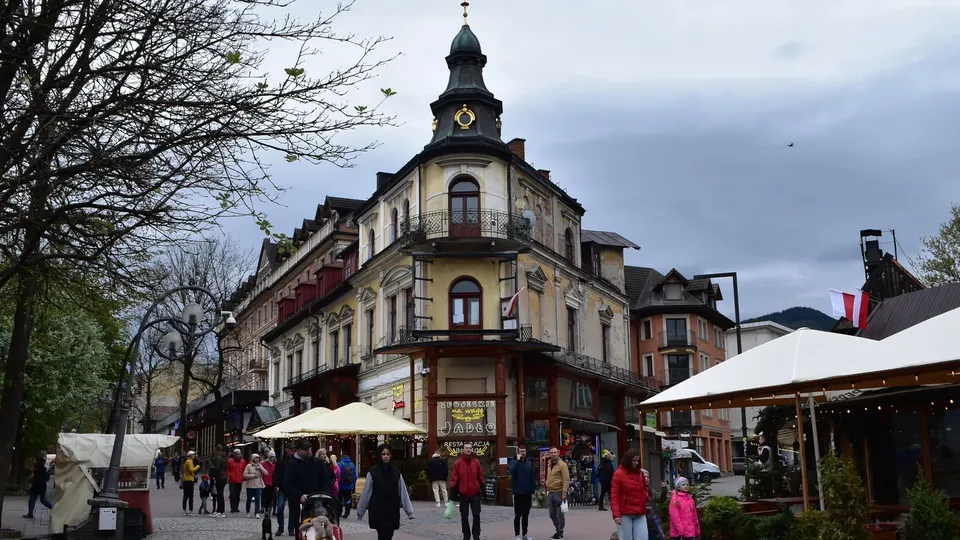
The small practical things - how to pay, how to stay connected, what to do if someone gets ill - are easier to sort out before you arrive. This page collects them in one place.
Money
- Currency: the Polish złoty (PLN). Prices in euro are rare, and euro cash is usually not accepted.
- Cards: Visa and Mastercard are accepted almost everywhere, including contactless and phone payments. Other cards are accepted less widely.
- Cash: useful for market stalls, some mountain huts, small taxis and public toilets.
- Currency conversion: when a card terminal or ATM offers to charge you in your home currency, choose złoty. The rate offered on the spot is usually worse than your bank's.
ATMs and exchange
- ATMs ("bankomat") are easy to find in the centre. Machines belonging to banks are usually cheaper than independent ones in tourist areas, which can charge high fees.
- Exchange offices ("kantor") are common. Rates differ, so compare the buying and selling rate before you change money. Rates at airports are usually worse.
Phones and mobile internet
- Free EU roaming applies only to SIM cards from EU countries. With a SIM from outside the EU, roaming can be expensive - check your operator's rates.
- An eSIM with a data package, bought online before the trip, is often the simplest option.
- A Polish prepaid SIM is sold in phone shops, kiosks and some supermarkets. It must be registered with an ID, such as your passport; staff in phone shops can help.
- Wi-Fi is standard in most accommodation, restaurants and cafes.
- Coverage can be weak or missing in some valleys and high in the mountains. Download maps before a walk.
Plugs and electricity
Poland uses 230 V and round two-pin plugs (type E; type F plugs also fit). If your devices have flat pins or UK-style three-pin plugs, bring an adapter. Most phone and laptop chargers work on 230 V, but check hair dryers and other appliances.
Emergency numbers
- 112 - general emergency number (ambulance, police, fire brigade), free from any phone.
- 985 or +48 601 100 300 - Tatra mountain rescue.
- 999 - ambulance.
Save the mountain rescue number in your phone before you set off on any walk. The free RATUNEK app calls the mountain rescue and sends them your location.
Medical help
- Zakopane has a hospital with an emergency department for urgent cases.
- For less urgent problems at night and on public holidays, there is out-of-hours medical care; ask your host or a pharmacy where it is.
- Private clinics offer appointments with doctors, often in English, for a fee.
- Travel insurance that covers medical treatment and mountain activities is strongly recommended. Visitors from EU countries should bring their European Health Insurance Card.
Pharmacies
Pharmacies ("Apteka") are common in the centre. At night and on Sundays, one pharmacy is on duty in rotation; the address is posted on every pharmacy door. Some medicines that are sold freely elsewhere need a prescription in Poland.
Shops and Sundays
Most shops are closed on most Sundays. Plan groceries for Saturday. Details in Shopping & Groceries in Zakopane.
Tap water
Tap water in Poland is generally safe to drink, although some people prefer filtered or bottled water. If you are unsure about your accommodation, ask your host. Do not drink untreated water from mountain streams.
Tipping
- In restaurants, around 10 percent is a common tip for good service. It is appreciated, not required.
- Check the bill first: a service charge is sometimes added, especially for large groups.
- When paying by card, tell the waiter the amount you want to pay before they enter it, because many terminals have no tip option.
- In taxis, rounding up is enough.
Public toilets
Public toilets often charge a small fee, so keep some coins. Restaurants and cafes usually expect you to be a customer. Mountain huts have toilets, often paid too.
The national park
Many trails start inside the Tatra National Park. An entrance ticket is required on many of them - buy it online or at the park entrance - and there are rules for visitors, such as staying on marked trails, not feeding animals and taking your rubbish with you.
Check before you travel: ticket prices, where to buy them and the current trail conditions are published by the national park.
Tourist information
The town's tourist information centre has maps, event information and advice on trails. Your host is often the best local source for weather, traffic and the day's conditions.
A few more things
- Time: Poland uses Central European Time (UTC+1, and UTC+2 in summer).
- Smoking is not allowed inside restaurants, cafes and public buildings.
- Safety: Zakopane is generally safe. As in any busy resort, watch your bag and phone on the main street and at the market.
- Language: a few words of Polish help - see Useful Polish Phrases for Travelers.
New to Zakopane? Start with First Time in Zakopane.